
Why:
The Greater Sacramento region needs fast, frequent and affordable ways to get around. For most people, driving on congested roads and freeways is the only viable way to travel. The state is spending millions to widen the Davis Causeway, which will do nothing to improve commutes. Existing transit options are too slow, infrequent and unreliable to compete with driving. Light rail expansions are expensive, not competitive with driving, and existing services are unavailable for most Sacramentans.
What:
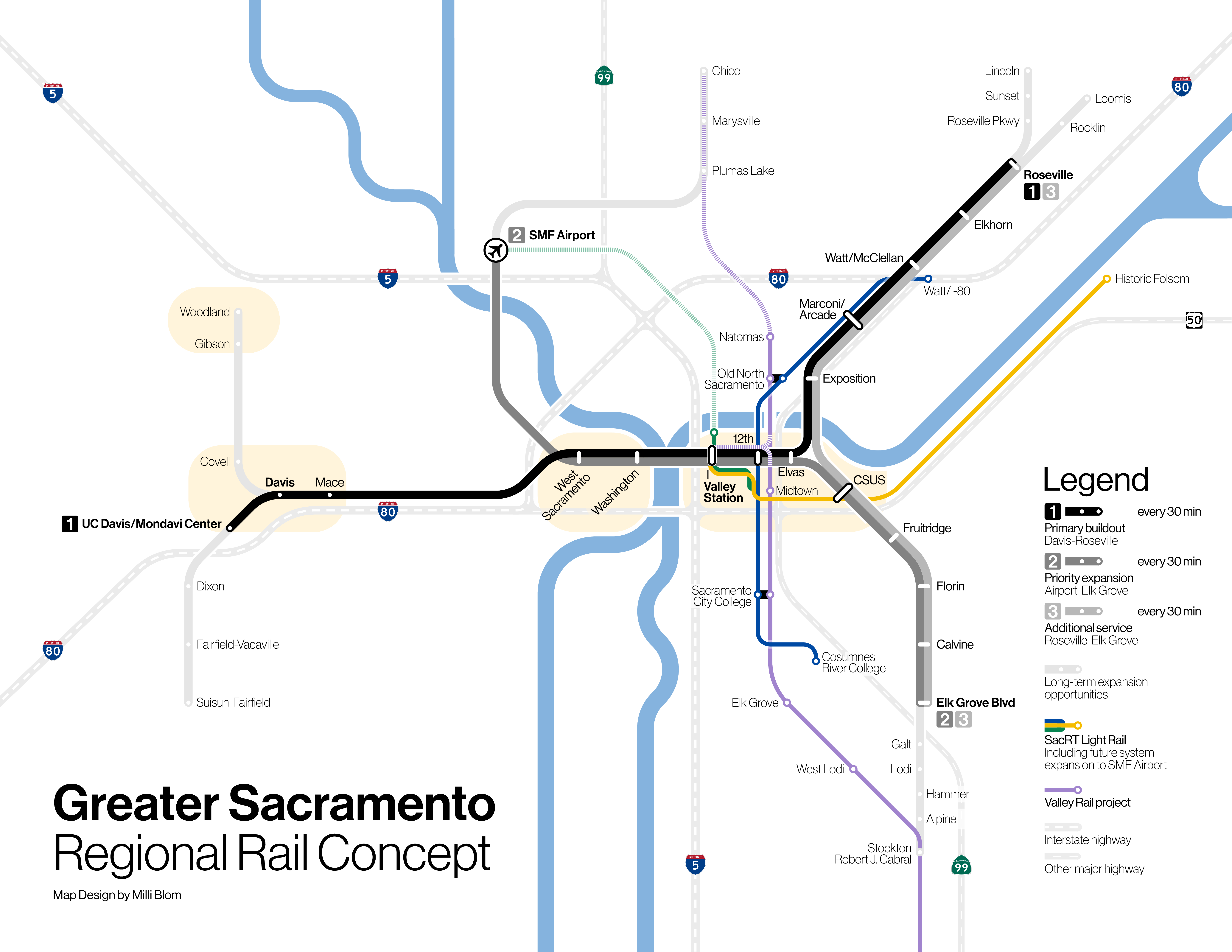
A regional rail network for the Sacramento metropolitan area that provides:
- All-day service for everyday trips like work, school, and leisure
- Fast and reliable trips
- Connections to SMF, Sacramento State, UC Davis, and the region’s largest event centers
- Destinations across the regions from Yolo County to Placer County, Yuba County to Sacramento County
- Affordable fares
- Reliable, zero emissions operations
- Integrated schedules and service with local transit operators like SacRT and Yolobus and intercity rail like Capitol Corridor.
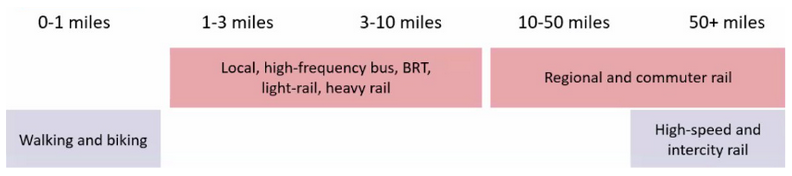
Regional rail provides a different choice of mobility than what is familiar in Sacramento.
- Regional rail best supports trips between 10 and 50 miles, runs 2-4 times per hour
- Intercity rail, such as Capitol Corridor, better serves longer 100+ mile trips at lower frequency and higher operating cost and fares than regional rail.
- Transit services such as light rail and buses provide shorter trips 2-10 miles, run more frequently with smaller vehicles than regional rail.
Advantages of regional rail:
- Existing railroad infrastructure could support up to 125 mph top speeds
- Light-weight, high-acceleration electric multiple units (EMUs) can support more frequent stops than intercity rail
- Consistent schedules every 15 or 30 minutes allow for timed transfers to bus and light rail at stations
- Hub stations allow for transfers to intercity rail or other regional rail lines
The 2024 California State Rail Plan calls for 30-minute interval regional rail service between Davis and Roseville. Some of the required infrastructure is already being developed via the Sacramento to Roseville 3rd Track Project. The Sacramento region could utilize existing rail corridors to create a regional network. Sacramento Valley Station must allow thru-service. For example, trains originating in Roseville can continue to West Sacramento and Davis – further expanding access to opportunity throughout the region – not just downtown. Under this network vision, existing and new infrastructure could be used to create fast and frequent regional rail access to the Sacramento Airport. Timed transfers between regional rail and transit at Sacramento Valley and West Sacramento Stations could allow more people across the Sacramento region and beyond to access the airport without the hassle and cost of driving and parking long-term.
How:
Leaders in Sacramento, Yolo, Placer and Yuba counties need to hear support for the following:
- Fully fund construction for the Sacramento to Roseville Third Track Project to allow Capitol Corridor to operate more trains to Roseville.
- SACOG (Sacramento Area Council of Governments) and Caltrans should study a Sacramento regional rail vision, including governance, benefits, costs, jurisdictional superpowers, risks and operations.
- Capital Area Regional Tolling Authority should commit toll revenue from managed lanes to planning, environmental, and engineering
- Caltrans should include regional rail in their upcoming Service Development Plan for Capitol Corridor
Who:
This is a project of Californians for Electric Rail, including Sacramento regional transit advocates. Sign up here to get involved! Click here for a printable version of this page to share with your neighbors!