Metrolink is in a dire situation in 2026. Dozens of trains across the system have been permanently cut due to equipment issues stemming from deferred maintenance - and more cuts could be coming in October thanks to a $30M operating budget deficit. While Metrolink had ambitious plans for service improvements, now riders could see mid-day, evening, and weekend trains eliminated instead. All while gas prices are skyrocketing and LA expects a massive influx of transit riders for the World Cup and Olympics. Read on to learn more about the root problems and how you can take action.
This deficit is driven by three factors: lower-than-expected ridership despite strong growth, rising expenses, and LA Metro and OCTA’s decision to cut funding to Metrolink.
Like all rail agencies, Metrolink has struggled with ridership since the pandemic, but is recovering. Metrolink broke all time weekend ridership records in March 2025. Between 2024 and 2025, Metrolink saw some of the highest percent increase in ridership of any regional rail agency nationwide, behind only Caltrain, which electrification made a resounding success.
Unfortunately, ridership has not grown enough to be financially sustainable for Metrolink’s farebox-reliant funding model. As of February 2026, ridership was at 58% of pre-pandemic levels - healthy, but below forecasts used for budgeting.
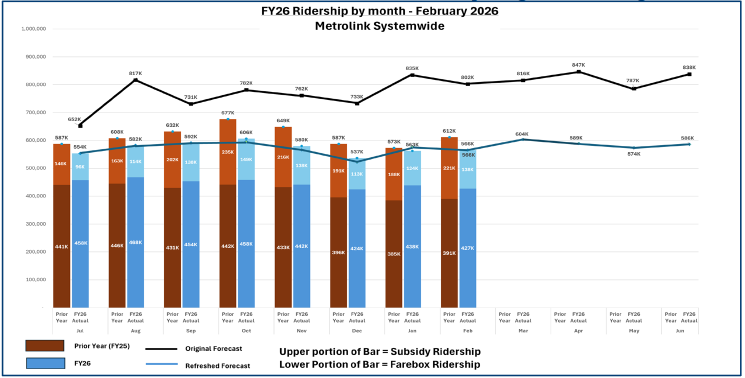
At the same time, expenses, particularly for contracts, are rising. Contracts with Alstom and Herzog (who handle maintenance) and sheriffs account for 48% of operating costs.
Finally, Metro and OCTA, who provide most of the local funding for Metrolink, are cutting $9.5 million per year for the next four years - accounting for about ⅓ of the total deficit. OCTA made a 10% cut ($5.2M) from what they usually pay, while Metro is cutting 3% ($4.3M). Metro and OCTA are throwing Metrolink under the bus just as Southern California needs it the most. How does that sound to you?
Metrolink is looking at ways to reduce costs. They haven’t raised fares in 13 years, so fare increases could make up some of the deficit. But Metrolink says that significant service cuts are unavoidable. We need to take action and tell Metro and OCTA they can’t abandon Metrolink.
In upcoming installments of this series, learn how Metrolink’s structural and governance issues made this crisis inevitable - and how this crisis is an opportunity for a more visionary regional rail system. Meanwhile, it’s time for action. Decision makers need to hear from Metrolink riders and transit supporters.
Timeline
Budgets are finalized in June. There is still time to reverse Metro and OCTA’s decision! Speak out at upcoming Metro board meetings April 23rd, May 21st (budget hearing!) and May 28th, and OCTA board meetings April 27th, and May 11th (budget hearing!).
What you can do
- Tell LA Metro and OCTA to pay their share of Metrolink’s budget at upcoming board meetings. Take action here!
- Demand the SB 1098 Working Group allow public access on April 28th and beyond
Read Part 2 of this series for more context on how Metrolink governance created this crisis.